Our own protection, built in house for our emulator. Because we write both the client and the server, it knows what a clean session is supposed to look like - and it decides on the server, where a cheat has no say.
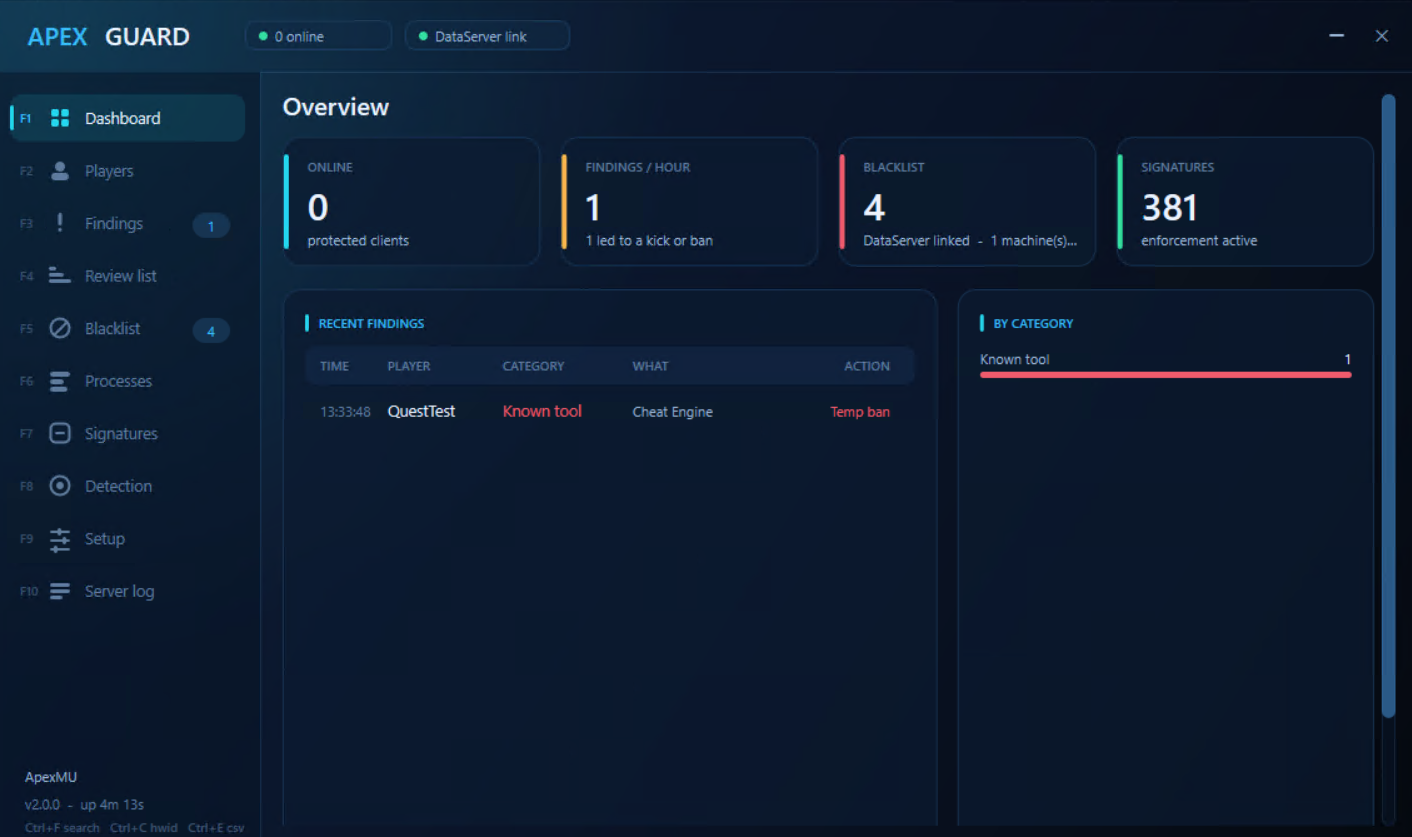
Running on our test server
The server console: what the protection found, and what it did about it.
What it is there for
Memory editors and trainers - the tools people use to edit a running client.
Injected code and clients that have been tampered with.
Bots, macros and automation.
Speed manipulation.
Overlays and other cheat software running alongside the game.
Modified game files.
Multi client abuse, with a limit you set.
Enforcement you control
Findings are scored, and you decide where the line is: from a log entry to a permanent ban.
A ban is not just an account. It reaches the machine, and it closes every client that machine has open.
Bans are shared with the DataServer, so the GameServer enforces them too.
What a machine and an account did before is remembered; a repeat offender does not start clean.
Every ban leaves a case file, so a decision can be reviewed later.
The server has the last word
Detection and enforcement live on the server, not in the client, so they cannot be patched out.
A client that is not protected does not get in.
The GameServer still sees every player's real address.
An unprotected session is removed while it is running, not at the next login.
Yours to tune
One console for the whole thing: what was found, who it was, and what happened.
Every threshold and every action is configurable - as strict or as forgiving as your server needs.
Findings can be sent to Discord, so you hear about them without watching a window.
New detections reach every online client without a restart. Anything that works today has a short shelf life.
Built for our files, not bolted on. We do not publish how any of it works, and it is still being developed - what it catches keeps growing.